Call or Text Cassi:
(765) 681-7679Most service business owners are spending money on marketing every month without any real way to know if it's paying off. This post walks through what good tracking actually looks like, why it matters more than most people realize, and how to start holding your marketing to a simple, honest standard.
In This Article:
Try this: think back over your last ten customers. Where did each one come from?
If you can answer that cleanly, you're ahead of most. A lot of business owners have a rough sense, maybe a feeling that Google has been good lately, or that word of mouth is picking up, but they don't have actual data. They're running on intuition.
Most marketing services don't make tracking easy or transparent. Agencies send reports full of impressions, clicks, and engagement rates, numbers that look like results but don't tell you whether the phone rang. So owners stop asking.
The problem is that without knowing where leads come from, you can't make smart decisions about where to put your money.
At its most basic level, tracking means knowing which marketing channel produced which customer action. A call, a form fill, a booked appointment. Not a page view. Not a like. An actual lead.
For a local service business running Google Ads, that means a few things need to be in place. You need call tracking, which connects incoming phone calls to the specific campaign or keyword that drove them. You need conversion tracking in Google Ads, so the system knows when someone clicked your ad and then took action. And you need someone looking at that data regularly and explaining what it means.
When those pieces are in place, you stop guessing. You know that your HVAC campaign generated 14 calls last week, that 11 of those came from one specific ad group, and that your cost per lead is running at $38. That's a different conversation than "I think the ads are doing okay."
I've worked with business owners who were spending $2,000 a month on ads and had no idea if a single call came from them. Once you can see where your leads are actually coming from, everything changes.
Cassi Lowe, LeadLocal Partners
A good weekly report doesn't need to be complicated, but it does need to answer a few specific questions.
How many leads came in this week? Not clicks, not impressions. Leads. Phone calls, form submissions, direct contacts from someone who wants your service.
Where did those leads come from? Which campaign, which ad, which keyword? This tells you what's working so you can do more of it.
What did each lead cost? Take your total ad spend for the week and divide by the number of leads. That number, cost per lead, is one of the most useful metrics in local advertising.
Is anything broken? A good report also flags problems, a campaign that stopped serving, a landing page with a suddenly low conversion rate, a phone number that's not tracking correctly.
If your current marketing partner isn't giving you answers to those questions every week, that's worth thinking about.
Campaigns drift. It's not dramatic, it just happens slowly. A keyword that used to perform stops converting. Ad fatigue sets in and click-through rates fall. Your landing page loads half a second slower after a site update and conversions dip. None of these things trigger an alarm on their own.
When someone is reviewing performance consistently, these issues get caught early. When nobody's watching, you find out three months later when you realize you haven't gotten a lead in weeks.
Tracking isn't just about knowing what's working. It's about catching what's stopped working before it becomes expensive.
The simplest version of this: can you look at what you spent last month and point to the leads or booked jobs that came from it?
If the answer is yes, your marketing is accountable. If the answer is "I think so" or "my agency said it was a good month," that's a sign the reporting isn't serving you well.
Good marketing for a local service business doesn't need to be mysterious. You spend money. Leads come in. You can see exactly where they came from and what they cost. Over time, you optimize based on what's actually working. That's the whole system.
If you want to see what that kind of reporting actually looks like in practice, reach out. LeadLocal Partners builds tracking and weekly reporting into every campaign from day one, so you always know exactly what your ads are delivering.

Cassi Lowe
LeadLocal Partners was founded by Cassi Lowe, a digital marketing veteran with over 15 years of experience generating results for local businesses. After seeing countless service businesses struggle with ineffective marketing, Cassi built LeadLocal Partners with a singular focus: delivering measurable lead generation through targeted search advertising.
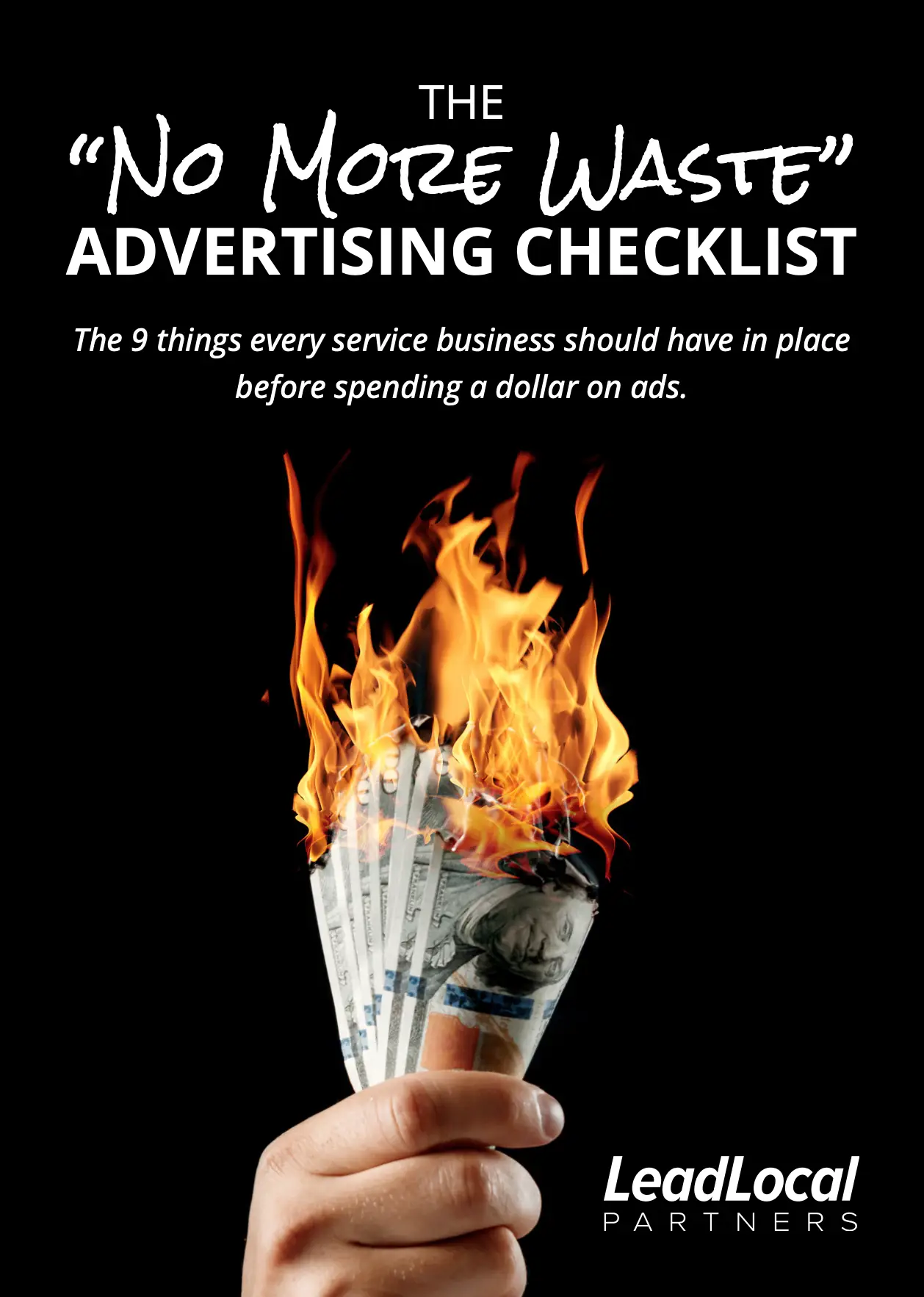
Before you spend another dollar on Google or Bing, this checklist will help you catch the silent leaks killing your results.
If you want leads that turn into booked jobs, not just clicks, start here.
"*" indicates required fields